A fine WordPress.com site

Posts tagged ‘Writing’

Death as a Fine Art

Bartender’s Guide to Murder Book 5

Chapter One

I THINK WE HAVE A SITUATION

The gingerbread man was dead in the lobby.

This was the ultimate surprise in an afternoon of unexpected events. I honestly thought we’d already awarded shock of the year, but by anyone’s account, the demise of Noel Schlessinger topped them all.

Here’s how it went down.

It was a crisp Friday afternoon in mid-November and I was in the Battened Hatch, the Scottish pub attached to the inn misleadingly named MacTavish’s Seaside Cottages Misleading because there is no sea and there are no cottages. There was, however, a MacTavish, scion of the family who’d run the inn for over one hundred years. The inn itself is magnificent and woodsy and one-of-a-kind. It pours out of the hockey-rink-sized lobby in three directions, hallways meandering the hills of Tranquility, New York, an Adirondack town that had twice hosted the Winter Olympics.

Though the cavernous lobby is made of dark wood, light floods it both from skylights and a back wall of floor-to-ceiling windows, which provide a panoramic view of a small lake encircled by old-growth forest. A huge statue of downhill skiers, seemingly whooshing from one of the skylights, bestows upon the lobby a feeling of movement and excitement. Near the statue stood a maroon circular sofa, known in bygone days as a banquette settee. Its center pillar anchored a ring of seats facing outwards, perilously close to the skiers’ path— giving the impression that unwary loungers could easily be whacked by the skiers.

We’ll get back to that settee.

On the far side of the lobby are two doors. One is chrome and glass, usually set wide open, welcoming all comers. It leads into a restaurant named Pepper’s, a cheery, pricy, upscale place that overlooks the lake and caters to the tourist trade.

To the right of this entrance is an undistinguished wooden door. The small, painted pub sign above it features a masted sailing ship cutting through waves above the words That Ship Has Sailed.

Through that door is a dark hallway that smells of wood polish and leather. It is the only working time machine I know of. At least, it functions as one for me, leading back into a past that doesn’t normally exist; a past in which mahogany bars were lined with larger-than-life characters sipping extraordinary concoctions, alcoholic or not, created by the local barkeep and mixologist.

In this case, that would be me.

Those in the know call the pub by its local nickname, The Battened Hatch.

That’s where I stood that autumn afternoon, along with Marta Layton, my assistant manager and bartender-in-training. While teal-colored hair came and went from everyone else’s fashion statements, Marta’s highlights stayed firm.

In front of the bar sat a blonde woman.

She had said hello to me and I answered in kind as she slipped onto a comfortable, cushioned bar chair. As she sat, so did a large gentleman—in his early sixties was my best guess. He had a face with animated features highlighted by male pattern baldness, and the squarest forehead I’d ever seen. He wore a tan jacket. “Hey,” he said, in a way that implied he had now arrived and any other patrons or conversations could wait. “Hey. Gimme a hot chocolate and bourbon.”

As he spoke, the door from the kitchen swung open behind me and Stormie Edwards, Chef Angelica Dormer’s sous chef, bounced through. “Avalon!” she said, “Have you heard who’s here—”

Stormie’s eyes landed on the woman in front of me and she screeched to a halt. “Um,” she pivoted, “the first contestant has arrived. For the gingerbread house competition. It’s real, and it’s happening!”

As she turned back around, she gave a silent scream which could be seen only by Marta and myself. It was clearly referencing said woman.

“When does the competition begin?” I asked, partly to help bolster her flimsy cover story, partly to torture her by not allowing her to escape her proximity to the actor whose fame had her hobbled, partly to postpone my own interaction with said movie star.

“The contestants arrive today and tomorrow. Filming starts on Saturday night.”

“Filming?”

“Well, technically ‘digitally recording’ for the network. Yes, it’s not like the National Gingerbread Competition at the Grove Park Inn in North Carolina. There, anyone can enter and the gingerbread creations arrive fully built. Ours only has half a dozen pre-selected competitors, and they have to put the structures together here. They also have to incorporate some gingerbread they’ve cooked here on site. It’s all being filmed—recorded–for the Delicious Network.”

“They have to cook here? Where?”

Stormie nodded back toward the door she’d just come through.

“Angelica’s kitchen?” I asked. “Strangers cooking in Chef Angelica’s kitchen?”

“That’s why it’s a good thing she’s away at the Brewster Competition, isn’t it?”

“Chef doesn’t know?”

“The local health inspector has signed off on it,” she said quietly. “They’ll use it in one-hour segments, overnight on Saturday. It will be pristine by Sunday morning.”

As I continued to stare at her, she protested, “Mr. MacTavish is thrilled, you know that. Think of all the publicity it’s bringing! And the hotel rooms will be full of contestants and television crew.”

“This was your doing?” Truthfully, it was pretty impressive. And, as she said, Chef Angelica was away. I wondered sometimes if Sous Chef Stormie was a better fit at Pepper’s than Chef Angelica. Did Stormie sometimes wonder that, too?

“That’s why I’m here, Missy,” said Mr. Hot-Chocolate-and-Bourbon. “I love to follow gingerbread competitions this time of year. They’re so creative—and I love the drinks that come with them!”

I turned back around to the patron who had dared rename me Missy.

Okay, okay, yes. I was aware there was a Welcome to Gingerbread Land banner outside, and cards with the times of events and listings of gingerbread-themed drinks.[Sd1]

Which didn’t mean I was ready for it to begin. I knew the contest had to be over before Thanksgiving so the houses could be on display starting Black Friday and running through the holiday season as a tourist draw.

That didn’t mean I had hot chocolate at the ready. In my mind, that came after Thanksgiving, as we entered the Christmas/ski season. They weren’t really planning to get this competition edited and running before Christmas, were they?

“You follow gingerbread competitions?” I asked my patron.

“Yes, indeed. I’m proudly known as the Gingerbread Man in some circles.”

“How are you known in other circles?” I asked.

“Noel. Noel Schlessinger.” I could detect a Long Island childhood in his accent. He reached out a beefy hand and gave mine a strong shake.

As we’d been discussing the cooking competition, staff and guests from around the hotel had been peeking in to get a gander at our famous guest, quietly seated next to Mr. Gingerbread. Some of them nonchalantly found tables, others just piled into each other, Keystone-Cop style, at the end of the entry hall.

“Can you go into the kitchen and see what the hot chocolate situation is?” I asked Marta.

“Mom?” she whispered, referencing my earlier address of the celebrity seated before us. “You said, ‘Hi, Mom?’”

I hoped she hadn’t heard, or noticed, my shocked greeting. I’d hoped–and continued acting as if—no one did. Apparently, I was not so lucky.

I turned her around and shoved her through the swinging kitchen door.

“Coming right up,” I said to Noel.

Then, with no further excuses for stalling, I turned to the A-list actor before me.

“Can I get you a drink?” I asked. “Or would you like to go somewhere and talk?”

“Sure,” she said. “The second one.”

“Back this way,” I said.

She stood and Noel Schlessinger realized for the first time who he’d been seated next to. His jaw dropped. He sputtered, trying to talk, reaching out, but she was already beyond his grasp.

I led the way to the back wood-paneled hall. Did I mention I was wearing a cast? It was a walking cast and I told myself I was good at walking in it, but still, if you were trying to nonchalantly stride somewhere, it added its challenges.

I hobbled as quickly as I could.

Across from the restrooms was the bar’s storeroom. No one had followed us—yet. Everyone in the bar was surely thinking of a reason they had to use the restroom. We had approximately ten seconds to disappear, by my reckoning.

I unlocked the storeroom door and we bolted inside, shutting and relocking it behind us. Not turning on the lights, I led us towards the back of the room, to keep our voices out of earshot. The storeroom is large, with two rows of shelving in the middle and a heavier version against one wall. A refrigerated unit nestles across the other.

The room smelled faintly of fake lavender from a floor-cleaning product. There is no back window to allow in sunbeams and dust, only semi-darkness softened by the green letters of the exit sign and a light-sensitive nightlight I plugged in for occasions such as this.

In fact, I’ve had so many private conversations in the storeroom that in that moment, I decided to get a couple of chairs, a lamp and a tufted rug. Beige, probably.

Dear God, I was thinking anything not to have to deal with the chiseled perfection in front of me.

“Avalon, what happened?” she nodded to the cast.

“Why are you here?” I asked.

“It’s good to see you, too,” said Anna Nash. “What happened?”

We looked at each other. I remembered almost dying once and being sorry I hadn’t made things right with her. I was so brimming with emotions—every single one ever invented—that their only escape route was a single tear, a warm streak down my cheek.

“I jumped off a building,” I said. “It was on fire.”

She pulled me to her. I didn’t have the strength to fight her embrace. Even though I was in my late twenties, fitting into the space of my mother’s arms, the familiar scent, the soft warmth of her sweater, the safety and danger promised there, I wept.

I am not an emotional person. I’ve been through a heck of a lot without losing my cool. Ask Mike Spaulding of the state police.

Mom always makes me lose my cool.[Sd2]

“Can you tell me what this is about?” she asked, referencing my outburst.

I shook my head. “Too much to go into.”

She nodded. We moved to stand in the back corner by the nightlight so we could see each other. She wore jeans and a beige sweater. Her natural blonde hair was a shade lighter than mine, brushing against her shoulders, molding her into a Nordic warrior. She worked out faithfully—she had to, it was part of the job. Her muscles were honed but not sharp. She wasn’t tiny and elfin, she was statuesque, five eight, maybe? I’d never asked. But she gave off an aura which made her seem larger than life.

There is a ditty amongst the Nordic sisterhood which starts:

I am my mother’s savage daughter,

The one who runs barefoot cursing sharp stones.

I am my mother’s savage daughter,

I will not cut my hair, I will not lower my voice.

Those lyrics alone bring me strength in difficult situations. The thing is, there is nothing savage about my mother. She is kind. She is brilliant and brilliantly talented. She is funny, compassionate, willing to wade in to help in any given situation.

She is perfect.

Which makes it impossible to be furious with her, as, by definition, the problem has to be someone else’s. Problems are for imperfect people.

Like me.

I wiped my cheeks with the back of my hands.

“I’m sorry we didn’t get to spend more time together at your mormor’s funeral,” she said.

“Me, too.”

“There’s something I need to talk to you about, to do with changes in the family. Is there a time that would be good? After work, maybe?”

“I’m not closing tonight. I’ve promised to work a show at a local art gallery.”

“After that? What time will you be done?”

“The show is seven to nine. I’ll likely be done by nine-thirty. Is that too late? Will you still be here?”

“I’m here to talk to you,” she said.

I knew what I should say next. I should offer her the guest room in my cottage. I should invite her into my life. The life I’d worked so hard to build here. The life where I was Avalon Nash, bartender and friend, not Avalon Nash, daughter of Anna Fucking Nash.

Not inviting her was quite obviously keeping her at arm’s length. Worse, it amounted to throwing her to the public and the adoring fans.

“Do you have a place to stay?” I finally said.

“Yes. I have a room reservation here. I’m checking in under Anna Karenina,” she smiled. She loved to borrow the monikers of famous Annas when she stayed in hotels. “But you have my number. We can text.”

“I do,” I said. “Will you be all right? People seem to have discovered you. Rise O’Connor was just here,” I said, referencing a childhood friend who was now a well-known actor. “He had some challenges with people stalking him.”

“Rise, really? How is the kid?”

“Complicated. I’ll fill you in later.”

“Okay. And don’t worry. I can handle myself. When you act normal, people usually settle down.”

Good luck with that, I thought.

“Text me when you’re done,” she said. “Quaint town. Think I’ll look around.”

“Okay. But Mom, be careful.”

“I promise.”

“Should I see if the coast is clear?” I asked, heading for the door.

“Naw. It’s usually best to walk through and be gone before they realize you’re there.”

She put her hand on the doorknob. We nodded to each other. She opened it, stepped out – head high, smile on her face – and walked resolutely toward the exit door to the pub.

It worked. Everyone she passed stopped, as if turned to stone in her wake. And then she was gone.

Marta was at the bar, overseeing the influx of drink orders. I stepped back to help her.

“Mom?” she said again. “Hi, Mom?”

“Now you know,” I said.

The next few hours flew by, as orders continued even though the unexpected guest had departed.

Things finally quieted down just before supper time, which was when Sous Chef Stormie reappeared from the kitchen behind me. She pulled me back away from the bar.

“I think we have a situation,” she said.

“Oh?”

“Mr. Schlessinger, the guy who was sitting here, who called himself the Gingerbread Man? I saw him sitting in the lobby and I went to sit next to him to ask if he would enjoy being interviewed for the Delicious Network show.”

“And?”

“He wouldn’t answer me.”

“Did he say maybe?”

“No, I mean, not at all. I think…I think he’s dead.”

I THINK WE HAVE A SITUATION

Ingredients

Cocktail (batch recipe)

3 qt saucepan

6 cups of milk of your choice (preferably whole milk)

1 cup semi-sweet chocolate chips

1 tablespoon of honey

1 vanilla bean

6 oz Bourbon (your choice); set aside

Raw honeycomb or fresh loose honey for garnish

4 Cocktail Mugs

Whipped crème

1 large mixing bowl

3 cups of heavy whipping crème

3 tablespoons of loose honey

Remainder of vanilla bean seeds

Method

Hot Chocolate

Add milk to sauce pan and stir until you have a gentle boil, continue stirring while adding the honey and semi-sweet chocolate chips. Slice vanilla bean down the center and scrape half of the seeds out and put into milk mixture in saucepan. Retain the rest for whipped crème. Continue to stir until all ingredients are mixed and then turn the heat down to low and let simmer for about 5 minutes stirring occasionally. Turn hot chocolate mixture off.

Whipped cream

Add all ingredients to large mixing bowl and whip (by hand or blender) until you havesoft fluffy peaks.

Cocktail

Add 1 1⁄2 oz of Bourbon to each cocktail mug, ladle hot chocolate mixture into each mug, leaving a space at the top for whipped cream. Add a few nice large dollops of whipped cream to top of hot chocolate bourbon mixture and finish with a small piece of fresh honeycomb or drizzle some fresh lose honey on top of crème.

Keep reading on Kindle! https://www.amazon.com/Death-Fine-Art-Mystery-Bartenders-ebook/dp/B0DRW9GRL2/ref=sr_1_1? crid=174RFR1VMDQBZ&dib=eyJ2IjoiMSJ9.6yH2Znw05GgQu4585cIuzkWSRBfhkmQXmv50tUkaqJ1jYuCP8kfZ-rqe-Xfty0Lh.h9lSCDi9ZitIlGxtc4t0fqXFAr5ulCXoleVBksVN9sU&dib_tag=se&keywords=death+as+a+fine+art+linnea&qid=1736375561&sprefix=%2Caps%2C145&sr=8-1

Or support Lake Placid’s Independent Bookstore and order a paper copy! https://thebookstoreplus.com/browse/filter/t/death%20as%20a%20fine%20art/k/keyword

Sharon Linnéa is the author of the bestselling Eden Thrillers, Chasing Eden, Beyond Eden, Treasure of Eden and Plagues of Eden with Army Chaplain (Col) B.K.Sherer. She has written award-winning biographies of Raoul Wallenberg, the young Swedish architect who saved over 150,000 Jews in World War II and of Hawaii’s Princess Kaiulani. She started the Bartender’s Guide to Murder series after falling in love with the Olympic mountain town of Lake Placid, New York.
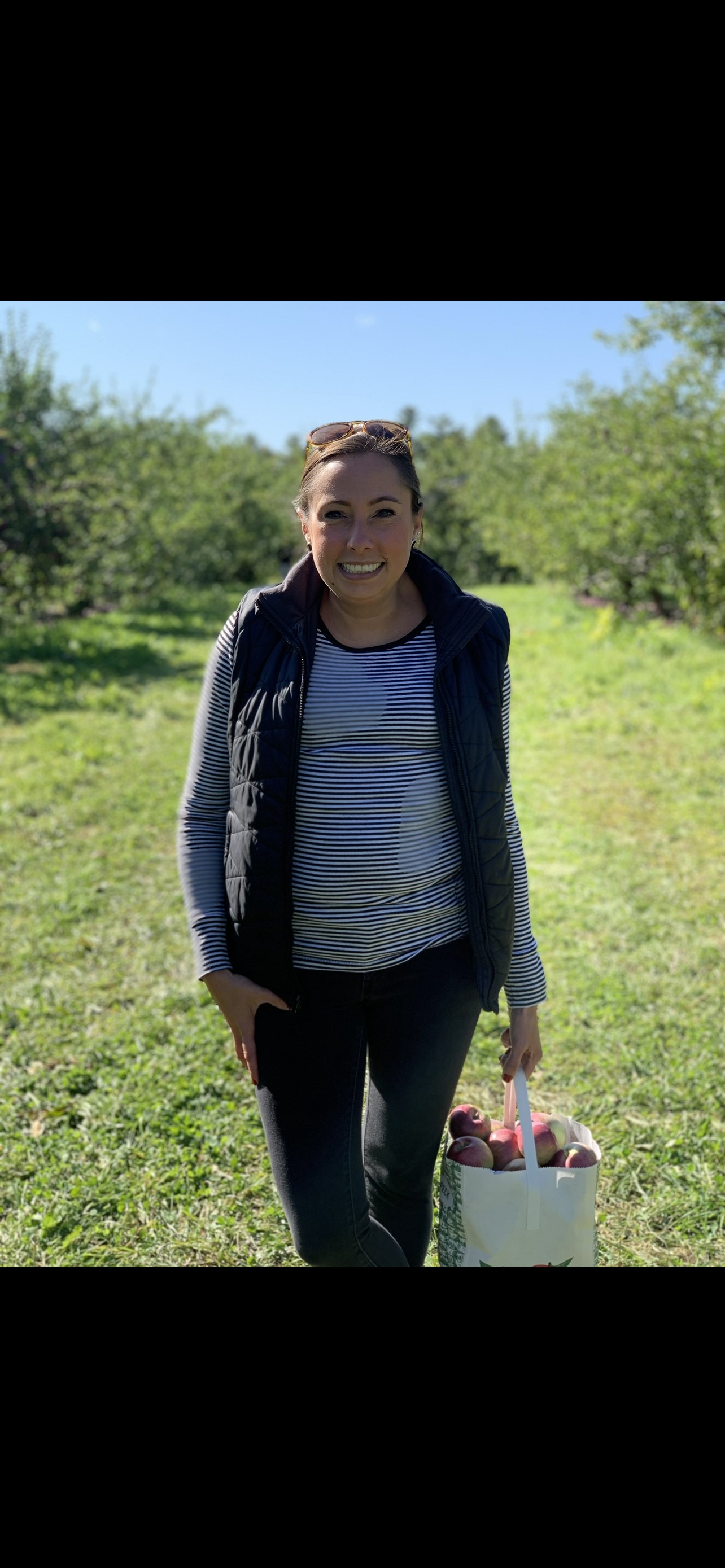
Jamielynn Brydalski is an internationally award-winning mixologist. She travels the world but met Sharon while bartending in Lake Placid, New York. More than 20 of her recipes are featured in the book.

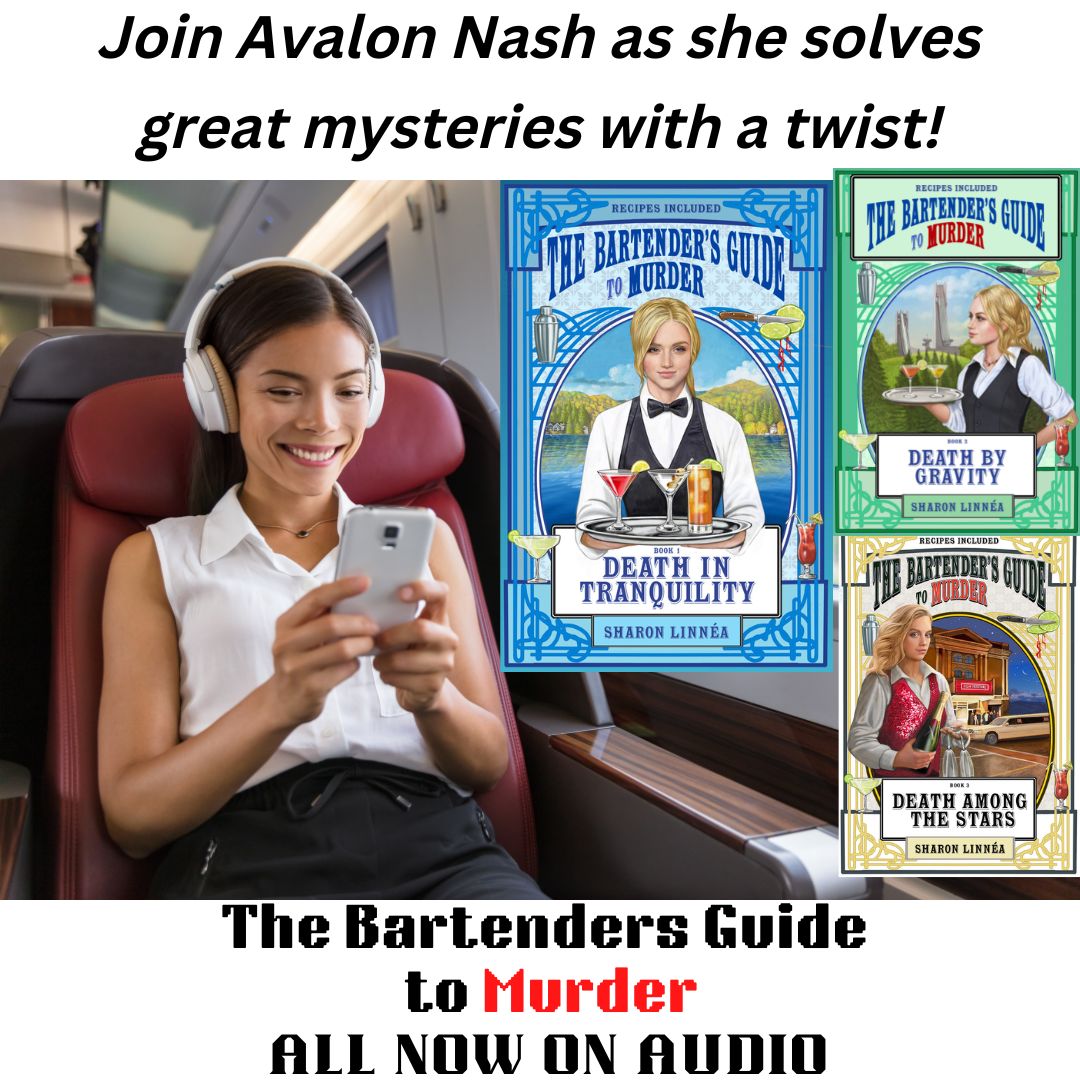
Secrets of an Audio Book Narrator

Hi, Sharon here. One of my favorite things in all the world is hearing people’s stories. Maybe it’s why I consider myself a storyteller first and a writer second. The idea behind the Spoon River Anthology, the author going grave to grave and telling (making up) the stories of the townsfolk and their interrelationships sounds like my idea of a great week—though, apparently, Spoon River was a depressing place to live!

In any case, when I did briefly work as a bartender, the best part of the job, hands down, was hearing people’s stories. (Sound familiar?) From the beginning of time, we humans have loved hearing stories. Reading them is wonderful, and now watching them is a great pleasure. But hearing them can be a special treat. So I was thrilled when it was time to turn my latest books, The Bartender’s Guide to Murder, into audio books–and thrilled again when actor/director Abbie Pfaff was chosen to perform them. Listening to each of them, Death in Tranquility, Death By Gravity and Death Among the Stars, I am happy to report, they’re great!

Curious to find out what goes into recording an entire novel, I got Abbie to answer some pressing questions.

How did you decide to produce and narrate audio books?

A friend of mine in Chicago is a Talent Agent, she told me during the 2020 beginning of the pandemic that I would probably enjoy narrating since my background is in Directing and Film. She was absolutely spot-on. 

What parts of your theater education came in most handy?
Script analysis was crucial; piecing together every scrap you can find about a character and making them as round and squishy as possible. Directing instincts kick in when setting a scene, such as keeping track of the environment around the characters and how it affects them. And then, also bringing the scene that has just happened into the next by carrying the emotions or lack thereof. 

What goes into the process that normal listeners might not realize?
Staying up until 4 or 5am recording to avoid the neighbors’ lawnmowers being in the background [if you have your own home studio]. Or the amount of thought that goes into which characters will be afforded a lower resonance. I’m not a big masculine creature, but I sure try to sound like one every once in a while. 

What were the most enjoyable parts of the Bartender’s Guides to Murder to record?
The climactic scenes where Avalon is in the thick of it, practically stepping on the murderers. Those scenes carry themselves in Avalon’s emotional state and anxious thoughts.

What parts were most challenging?
Most challenging of all, would be the beautiful art of pronouncing words, specifically alcohol brands. I worked as a bartender in Chicago for multiple theater venues and even with that, I can say with certainty, I was not prepared. Challenging, yet very rewarding to learn. 

Which characters did you enjoy voicing?
The way Investigator Spaulding somehow both takes charge of a room and then also cares so deeply for what Avalon has gleaned, he was absolutely enjoyable to play opposite of Avalon’s curiosity and playful nature. Glenn MacTavish has my heart in the recording booth, he is a teddy bear of love. Sally, she was a blast, a firecracker personality I’ve met many times in the theatre world. Alma Eddings, for her terrible discomfort with visitors. Isobel Lester, the woman could side-eye. To name a few. 

Any that were harder?
Accents were a struggle at times. Glenn MacTavish’s thick Scottish accent, as well as Avantika’s soft Indian accent, were difficult to get right. Eventually, with enough takes, I was able to hear their personalities shine through. 

What is your usual process for working?
Read the book, script analysis, highlighting, and plan the voices. Record for a few days, edit files for a few days, repeat. Proofing multiple times for any mistakes. Communication with the author throughout. 

What is your prep work? What percentage of the process is the actual reading?

It is a huge chuck of the process, at least a week goes into reading/rereading and analysis/notes. I place time “beats” and emotion based “beats” in the script to make the recording smoother later. I highlight character dialogue and character thoughts, this creates a quick signal in the booth to prepare for vocal shifts so that I will not need to stop. I research accents, research specific people’s voices, and pronunciation research. Luckily, I find joy in paperwork and zen in small details, otherwise it might have not been such a great career switch. 

Is there a time of day you prefer to work? An amount of reading you can do at one time?
I am a night owl. My workday begins around 3pm when editing and ends before midnight. With breaks, of course. On recording days, I start at 11pm and end sometime before 2am, preferably. Though, sometimes it is necessary to record up to when the birds wake up. I’ll go as long as I can, depending on how rough my vocals sound. I take a 10 minute vocal break for every 50 minutes recording.

Any thoughts for someone who might be interested in audio book narration?
Tell the story. Whatever you can do to help the words come to life in a way that benefits the narrative, do it. Your author matters, they know the meaning of each sentence they have written. They are a valuable resource that you should respect and communicate with. 

If you are listening to a well performed and produced audio book, what do you know to appreciate?
Their silences and pauses. The way the spit sounds and click sounds are edited out. How they use their breathing as a tool. How they are able to not annoy people even after hours of hearing them speak. 

Since each of the Bartender’s Guides to Murder features the recipe for a cocktail or mocktail after each chapter, it seems we should ask, what’s your drink of choice? 

Amaretto Sour is my natural go-to. However, I made a deal with myself that once I finished narrating the Bartender’s Guide to Murder series I would make some of the drink recipes from the books. “Waffles and Sympathy,” from chapter 10 of the first book, is at the top of my list. 

Click here to start listening now!
https://www.amazon.com/Death-Tranquility-Bartenders-Guide-Murder/dp/B09QFQ6XQ4/ref=sr_1_1?crid=EJ0MCM2Z0I56&keywords=death+in+tranquility&qid=1664570054&qu=eyJxc2MiOiIxLjI4IiwicXNhIjoiMS41MyIsInFzcCI6IjEuNTAifQ%3D%3D&s=audible&sprefix=death+in+tranquility%2Caudible%2C65&sr=1-1

Because WHY We Make Art Matters

Did you watch the Oscars this year? It was my favorite Oscars, ever.

I am usually ambivalent about awards that pit artists against each other. Talent is unique, material is unique, and deciding which actor, musician or writer is “better” than others at the top of their game is a stunt pulled by and for marketing. What I especially hate are the “losers.” Yes, everyone feels sorry for the nominees who don’t win, but, honestly, they’ve been feted and will continue to be. They’ve grabbed the brass ring. Then winners inevitably give “the speech.” You know the one–“Hey, kid in the middle of nowhere who doesn’t fit in! I once was you, and here I am! Your dreams CAN come true!” Obviously for the statue-holder, that is correct. He was feeling alone and misunderstood in Paducah, yet here he (or she) stands. Can’t argue with that.

If your dream is to live through middle school and high school and eventually end up somewhere where you feel comfortable in your own skin, absolutely true.

If your dream is to win an Emmy or a Tony or a Grammy or an Oscar–no, those dreams CAN’T come true, unless you are one person out of 500,000 truly talented working professionals in any art form during any given year.

To my mind, the real “losers” on these shows aren’t the non-winning nominees. They’re the uber-talented, hardworking artists who aren’t in the auditorium and will never be. In other words, most of us. Talented artists who spend hours doing art and also work at the hardware store, the library, the community college because we live in a society where bankers and plumbers are valued and dancers and poets and painters and singers and writers are not. The losers are also the general public who are only made aware of certain easily-accessible pieces of art which are mostly “entertainment.”

But this year showed there was another possible way to win.

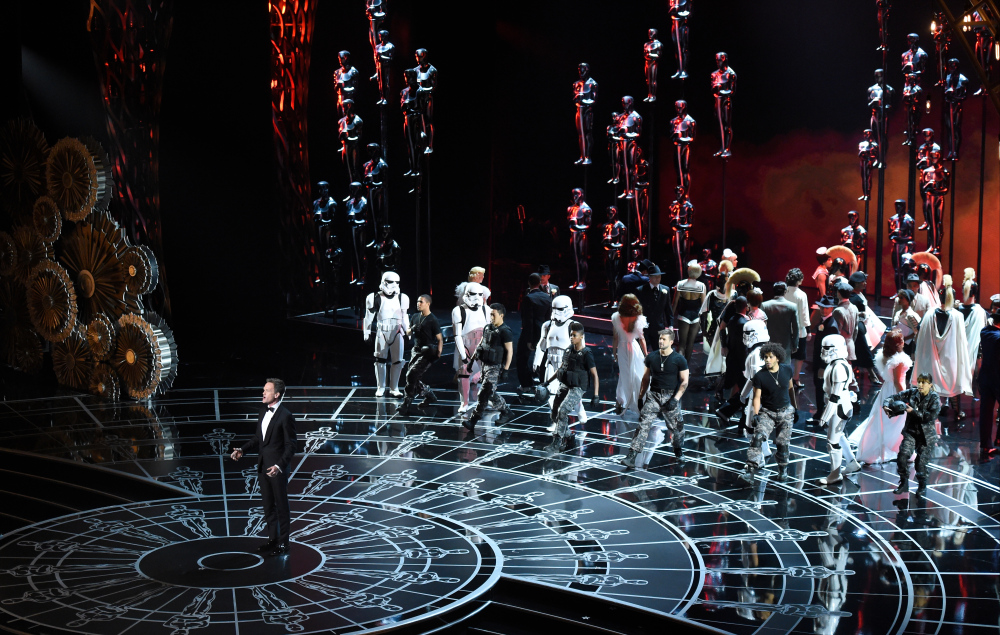
Okay, as far as entertainment value, it wasn’t close to the best Oscars. The opening number was XXX 2015_OSCARS_RD025_20150222_APS.JPG A  ENT USA CAinfectious and jaw-dropping as far as the special effects. The rest of the show proved that even Neil Patrick Harris, who rocked the Tonys and the Emmys, could not hold up the behemoth that is the Oscar telecast. It still implodes under the weight of its own importance. This year’s ceremony was crippled by the fact that all the winners were givens. (Although I’ve got to say that Meryl sold the grief bit before the “In Memorium” better than anyone ever has and proved her worthiness for yearly nominations all over again.)

But the reason it was great was that it was the first time I remember that we were all called to remember WHY we do art.

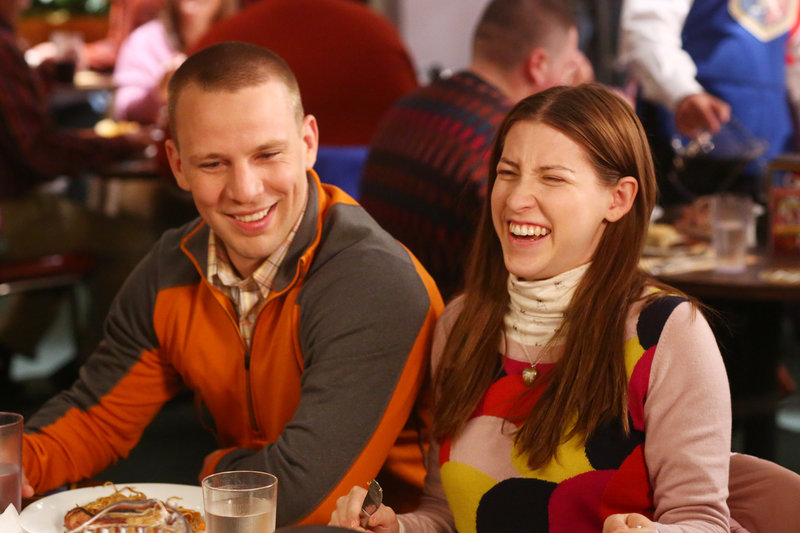
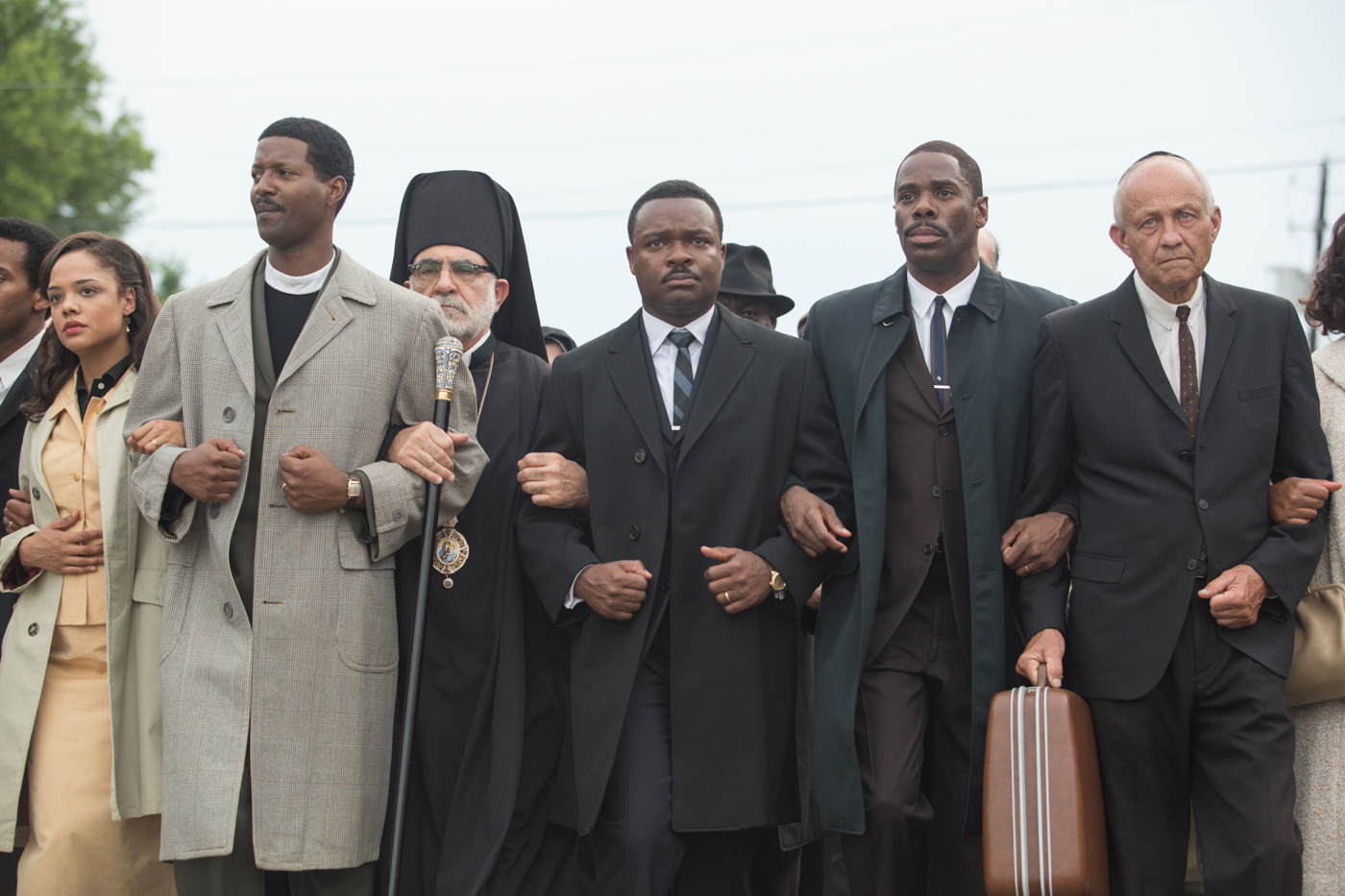
A couple of years ago, I was eNYTM_Actors_71diting a really wonderful book in which working actors talked about their craft, and how to have a successful life while being an actor. One of the best was Eden Sher, who plays Sue Heck on THE MIDDLE. She is phenomenal. USA TODAY and other periodicals have gotten tired of trying to call the attention of Emmy voters to this consistently bravura (and totally funny) show. They have never gotten the respect they deserve, but Eden is committed to her art and to her character (even at the expense of having “the Hollywood look” every week.)  Another mega-talent in the book was an English actor named David Oyelowo. I know lots of actors, and each actor has a pet project they will produce/star in some day. They also have a reasonable plan about how this is going to come about. Usually, this plan is in its 13th or 14th iteration. Mr. Oyelowo had played Henry VI for the RSC almost right out of drama school. He had then done a couple of interesting turns in quality BBC shows, after which he moved to the States. He was in EVERYTHING. In tiny roles. He was the pastor in THE HELP. (Do you remember there was a pastor in THE HELP?) The school principal in INTERSTELLAR. One of the Union soldiers who recite the Gettysburg Address to Lincoln in LINCOLN. The bag guy in RISE OF THE PLANET OF THE APES.  The other bad guy in JACK REACHER. So he was working all the time. But he had this pet project. He was going to play Martin Luther King, Jr. By the time he was interviewed for the book, he was on plan 12. Everyone in Hollywood knew that the project had been bouncing around for years and had lost funding (and directors) more than once. A lot more than once. But this one felt different to David. He is a man of principles and faith, and he felt the MLK movie was about more than David advancing his career. It was why he acts. He spoke about it in his NOW YOU TELL ME! entry. I thought of those as “genre comments,” filed under pet project.
You might notice I haven’t blogged much lately, even though I’m under strict instructions to be habitual. But I was tired of being a writer. Not of writing, but of being a writer. Making artistic decisions that are market driven. Trying to be fun and myself and yet do my part to market and sell my books. Watching famous friends who have grabbed the ring do it more easily than I (or at least in bigger houses and at fancier events). Truthfully, they often have people who do it for them. I thought, maybe I’ll just go back to writing little things that I like and that no one else has to like because no one else has money riding on it. (We writers often default to the introspective cave mentality.)

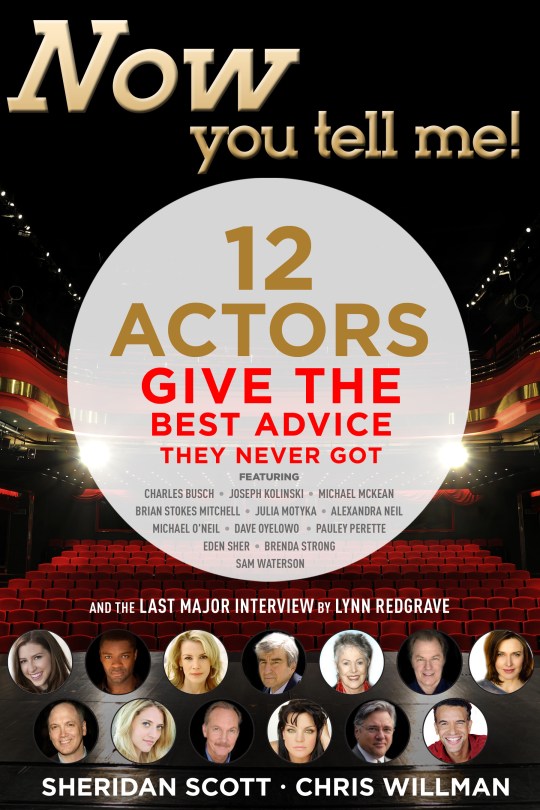
Now You Tell Me! 12 Actors Give the Best Advice They Never Got with all this wonderful acting (and artistic and living) advice came out, and it did fine. No brass bands, no brass ring, fine. Like so many wonderful books by wonderful people. Fine.

After the big push for my most recent novel, I was tired. I didn’t blog. I didn’t write. (I also didn’t clean the kitchen, lest you get the wrong idea.) I was just kind of worn down.

Then, last Wednesday night, I turned on the television, and THE MIDDLE was on. It was a 2-parter, in which Sue (our friend Eden) had to tell her boyfriend why she couldn’t marry him. This was just a regular sitcom on a regular night, not even a “very special episode.” And at the end of the show, Sue finally gaveeden middle Darrin her answer. It was one of the longest monologues I’ve ever heard on television–but you didn’t think of that, then. Because to “Sue,” every word of it was new and being discovered as she spoke it and deeply true. It was one of the most bravura pieces of acting I’ve ever seen. I was agog. This is WHY she acts.  (It is also WHY I watch actors.) If she isn’t nominated for her performance in “The Answer,” there is no justice in the world.  There’s every chance she won’t be. But as she was doing that scene, through however many takes, her WHY was plainly and proudly on display. Eden Sher, you GO, girl!

Which brings us back to the Oscars. You probably heard that David Oyelowo played the radical son of Oprah and Forest Whttaker in Lee Daniels’ THE BUTLER. He and his family spent Christmas with selmaOprah, and David told her about his pet project. Lo and behold, it’s 2015 and SELMA, starring David Oyelowo, is up for Best Picture.  You probably also heard that his performance was overlooked for an award. So, in the eyes of many, he was a loser. In fact, the Hollywood Reporter always runs “brutally honest” ballot deconstructions in which various anonymous members of the Academy tell why they voted as they did. One woman said she found it very distasteful that the cast and crew of SELMA actually took a stand on current matters of civil rights. Apparently, they should make movies about it, but not actually DO anything about it. But that was David’s WHY.

On Sunday night, John Legend and Common performed “Glory,” the Oscar-nominated song they’d written for SELMA. The production of it was stirring. At the end, the audience in the auditorium leaped to their feet in an ovation that you knew was not just for the song, but for the film, for Martin Luther King, Jr., for nonviolent resistance, for the call for justice in this broken world.

The camera cut to David Oyelowo, who was doing his best not to cry. And then he was crying. david-oweloyo-crying-selma.ls.22215

And it had nothing to do with winning, or even with whether he was nominated or not.

It had everything to do with the WHY.

And I thought, God bless you, David. God bless everyone who is brave enough to speak up and speak out and work for justice. God bless everyone who holds onto the pet project that encapsulates her WHY.

And hell no, I’m not crawling back into any cave. I’m writing what I want, what I’m SUPPOSED to be writing, the things that feed my soul and tell me WHY I write. And I don’t care about the “voters” who want us to write about things but not DO things. This is about LIFE. It isn’t about awards. Or marketing.

David, man, you awakened courage and purpose in many of us, not by winning, but by caring.

And to my fellow artists, writers, actors painters, I say, “remember the WHY. And let’s go.”


Pretty Normal…For a Writer

Last week I was the guest at a library book group. The librarian who booked me warned that they were a feisty group who would speak their minds. They were reading my movie murder mystery, THESE VIOLENT DELIGHTS.

crazy writer on bedThey were a feisty group, all right, and we had a fine time. They were an intelligent group, also, who spotted and wanted to discuss not only plot and characters, but ways I’d decided to work with the literary references and mystery tropes. One man said, “I admit it that at first I thought the book had a little too much estrogen for me, but then I started seeing how you were playing with the reader, and I became fascinated. It became a great psychological game of cat and mouse.” We talked about the writing process and the reading process and the contract implicit between author and reader.

Then one woman spoke up. “Well,” she said. “You surprise me. You’re not what I expected a writer would be like. I mean, we hear so much about writers being loners and anti-social. You speak English really well. I mean, you talk really interesting. I mean–well, you know.”

Green quoteThe thing is, I do know. Truth is, if you’re naturally gregarious and a doer rather than a ponderer, you’re probably not cut out to be a writer. (At least not a fiction writer. You’ll likely do well at writing and selling self-help.) Fiction writers are made from the stares of kids looking out the window during class, often accused of “being somewhere else” while something not as interesting (say, math or the rest of life) is going on.

It’s not that we writers are an unfriendly bunch. It’s that we keep to ourselves for a living. In fact, I belong to a group of professional fiction writers who work hard at helping their aspiring counterparts and giving opportunities to each other. I brought a friend to a recent party. No one talked to her. I posit this is because chatting is not a writer’s strong suit. (In fact, during my formative years,  my father was the pastor of a large Midwestern church, hence, my definition of Hell is still “a coffee hour you cannot leave.”)  On the bright side, the aforementioned gathering was at a painter’s club andl the painters were thrilled to meet my friend. She is planning to start taking watercolor classes there.

Now, there are sometimes when being something “for a writer” comes in handy. For example,  sitting around a pool in Hollywood, surrounded by people with body types unavailable to most of us, it helps to think, “Hey, I look pretty good for a writer!” Or, perhaps you’re in an endless PTA meeting where a few completely jerkish parents are STILL holding forth on an issue of seemingly no consequence, and you think, “wow, I haven’t killed anyone. Great self-control for a writer.” Or, you’re watching a TV show in which they’re having “adventures” with the ghosts on the Queen Mary, but the voice over is using the word “ironically” in such an egregiously incorrect way that it’s much more jolting than ghosts talking–but you don’t throw anything heavy at the television. “Wow, staying really calm…for writer.” (Okay, I turned the show off. Couldn’t take it any more.)

Most fiction writers would likely agree with John Green’s quote, “Writing is something you do alone. It’s a profession for introverts who want to tell you a story but don’t want to make eye contact while doing it.” I know the feeling.

And yet. Yet, now, somehow I’ve slipped over. I do love telling stories while looking people in the eye. More that that, some of the most fun times of my year are the “The Book Inside You Workshops” I lead  with fellow author and editor Tom Mattingly. It surprised me when I realized this had happened–this morph into a novelist who enjoyed standing in front of others and talking out loud.

I know exactly when it began to happen.

I started working in book publishing in New York while I was still at NYU, and I continued after graduation. My first two editorial jobs, at William Morrow and Taplinger, opened my eyes and taught me so much about books and authors and publishing. When visiting my parents in California, the writing teacher at the local community college asked if I’d come and talk to his creative writing class about publishing. I said sure. As I prepared my notes, I began to get excited. There was so much insider information I could give these writers that I would have loved to have had when I was starting out! I went to the class, and we all started talking–and talking and talking. Afterwards, I realized it didn’t matter what I’d worn or how I’d come across, all that mattered was the exchange of information. We were in it together.

storytellerSlowly, that’s what changed everything for me. It no longer became about me talking and others watching, it became about the exciting information I had to share, or the wonderful adventure of a story we were going to go on together.

Oddly, I stopped dreading looking people in the eyes when I realized that, instead of looking at each other,  we were looking together in the same direction. I got to be the one holding the lamp.

I’m pretty sure that’s the only reason, when I talk to others such as the library group, I seem pretty sane. (Also, I now realize that people will think you’re stuck up if they talk to you and you’re gazing into the distance so I’ve cut down a lot on that.)

Perhaps when we meet up, we’ll get into a stirring conversation about fantastical things. Perhaps we’ll use the word ironically correctly. Perhaps we’ll even discover we speak pretty good English for writers.

Until then, perhaps I’ll meet you in the middle distance…just beyond the next horizon…

IT’S NOT ALWAYS WRITER’S BLOCK: 3 Other Reasons You May Not be Writing

1typewriterSo. This book you’re writing. That you mean to write. That you’ve written some of. That you mean to get back to.

You’ve got the idea. You’ve got the talent. You’ve made the commitment. Why aren’t you writing?

You tell people it’s Writer’s Block, which can be kind of a catch-all, but usually means you’re unable to interact with the material in a meaningful way. Thousands of pages of advice on getting past Writer’s Block have been written.

But what if it has nothing to do with the material? What if you know what happens next, or you need a next book and your mind is as empty as the cornbread shelf at the grocery store on Thanksgiving?

Or you mean to write, you want to write, you know what to write…and it’s not happening?

Here are three possible culprits–once you’ve identified the suspect, it’s easier to make the arrest.

1)  Place in your creative cycle. 1 kayak over falls

This is something I’ve seldom seen discussed, but the fact is that human creativity has a cycle. Unless you’re a machine, you can’t constantly be on the “output” setting without taking time on the “input” setting. You need to see new places, talk to different people, read new books, think new thoughts, or you’ll have nothing to write about. Sometimes you’ve put all your creativity out there, and you simply need time to refill and replenish. Don’t beat yourself up about this. Think of it as a new beginning, a an important, wonderful phase for your personhood. Dive into that stack of novels awaiting you. Take that trip. Drive around your town at 5 in the morning or email a blogger or journalist whose thoughts you’ve admired. Watch documentaries. Listen to NPR. Agree or disagree and have a fine time doing it. When you start feeling feisty or excited or surprised or wonder-filled or ticked off, you’ll know it’s almost time to enter “output” mode once again.


2)  Priorities. 1 Yoda

Let’s get down to it. If you really really want to write but you just don’t have the time, well, you don’t really really want to write. Harlan Coben points out that Mary Higgins Clark was a single mom with 3 young children and a full time job when she wrote her first book. She did it by getting up at 5 in the morning before anyone else was up. James Patterson had a family and a high-powered 20-hour a day job running an ad agency, but he started coming in an hour early and closing his door and writing his own stuff. If you want to do it, you can find a way. Get up early. Stay up late. Bring a sandwich and write at lunch. Don’t watch a favorite show.

Some very important caveats: a) If you don’t have the time because you’re feeling too guilty because other things like housework and shopping and waxing the floor and seeing your mother and baking cookies for the bazaar are getting in your way, have a very stern talk with yourself. Explain that nothing trumps writing. Your writing time isn’t time you’re stealing from others, it’s a commitment you’ve made to yourself. Say that until you mean it. NOTHING TRUMPS WRITING.

b) Carve out that time on purpose: when and where it will be. In your home office at 5 a.m.; in your work office an hour before you’re “on call.” Make that sacred. You’re working.

c) Create your boundaries and explain them to others. Then make them actual boundaries. If the door to dad’s study being closed means kids, dogs and neighbors can come in and say, “what are you writing?” or “where are the car keys?” it isn’t a boundary. Kids, spouses and friends are remarkably trainable. If 5 to 6 is your writing time and you won’t be answering the phone, opening the door or responding to texts, give them a week, they’ll stop calling/knocking/texting. But your boundaries are only as firm as YOU make them.

3) Resistance.resistance

This is the internal force that fights against the undertaking of any creative project. It’s what makes you decide to mop the floor instead of working on your book when the floor isn’t even dirty. It’s what gets you to log on to your computer, open your manuscript–and go play games or watch videos for an hour. Steven Pressman, in his book (and his discussion with Oprah, below) claims Resistance rears its ugly head whenever you are poised to start something that will “move you to the next level” creatively or personally. It’s why there’s something important you need to do, you want to do, you know how to do–and you can’t make yourself actually do.

How do you overcome resistance? Apparently, there’s only one way. You identify it, call it by name and then run the creative ball down the field, knocking it down in the process.

In other words, you JUST DO IT.

(Of course, sometimes you might need encouragement and a plan. If that’s the case, find a good mentor or a local writers group to help you figure out how to start. This usually amounts to knowing how to break things down to small, do-able parts.)

Meanwhile:

You Write

Questions. I’ve got Questions.

As you know, we writers spend our days in deep philosophical reveries, contemplating Life, the Universe, and Everything. However, there are some questions that seemingly cannot be answered, even by fiction. I have started keeping a list, and I present some of them here. If you have any more of these questions yourself–or, have answers to any of these questions (huzzah!) please weigh in.

+ Why is the song “My Way” only sung by known jerks?

blue roses

+ When did flowers cease to be about fragrance? The idea that we invent roses that look pretty but have no smell amazes me, and not in a good way.

+ Do we really need both “hearty” and “hardy”? It seems either will do.

+ Why do they make it so an $800 dishwasher depends on a 3 cent piece of plastic that holds the detergent chamber closed?

drink dispenser+ Why are the spigots in those lovely beverage dispensers so high up? A good quarter of the drink will be un-pourable.

+Why do people who make toothpaste, dental floss and mouthwash assume everyone likes the flavor of mint?

+ Why do so many people think you need to come to a complete stop in a car before turning right?

+ Why do drivers now assume they MUST pass left-turning cars on the right, even if it’s dangerous, when they only save 10 or 20 seconds?

+ Why do people use “vanilla” to connote something boring or uninspired? I believe the flavor vanilla is phenomenal.

+ Why do they make pens that don’t write? Or at least don’t write for long, and are so choosy about types of paper and surfaces?

+ Why have police vehicles gone from flashing lights to a roadside light show extravaganza that blinds passing motorists?

+ Why do butter pecan and chocolate ice cream taste better when they come together in the same carton, rather than if you scoop them from separate cartons into the same bowl?

+ If the flies who are buzzing against the screen have lived their entire lives inside the house, are they suddenly really confused if they’re loosed into the vast expanse of sky?

+ Does Benedict Cumberbatch smoke simply to keep from being perfect? And can he not think of another fault that wouldn’t kill him?

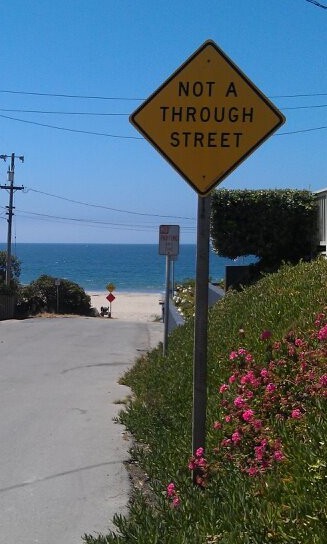
+ Did they need to pay to install this sign?

not a through stree


A Field Guide to Eden

SPOILER ALERT–IF YOU HAVE NOT FINISHED CHASING EDEN, THERE WILL BE SPOILERS

eden with lilacsSince the dawn of time, there has been a place that’s dwelled in the collective subconscious of the human race. It’s known to many cultures as Eden; where we once lived in a simpler time, in harmony with nature, with God, and with each other. It wasn’t perfect, it wasn’t paradise–it’s here on Earth, after all, and people will be people. But Eden was a place where the air was not toxic, there were no chemicals in food, and we were our best selves.

That is still the case in the hidden society referenced in the Eden Thrillers. We can’t tell you where it is or how to get there. And you’ll have to wait for the upcoming “inside Eden” book, SERPENT OF EDEN, for all the details. But here is a dictionary of terms to get you through until then. Or, until you visit, yourself.

serpent


With the publication of PLAGUES OF EDEN, the fourth of the series (and the first of the new trilogy), we’ve been asked for some reminders of the terminology readers will find.

The Steppe   how Eden-dwwellers refer to Eden

Terris world    how Gardeners refer to the rest of the world (where most of us live; also known as Topside)

Gardeners     residents of Eden

Mountaintop   The special school inside the Steppe where Agents and Swords train.

Vintner’s Cup    Training that every Gardener receives in how to grow and appreciate wine grapes

Terraces     The part of the Steppe that is planted as vineyards.

Swords of Eden   The 12 especially trained Gardeners who are the only ones that know the way into Eden

Agents of Eden    Gardeners who are trained to be agents of positive change in the Terris world

Messengers of Eden  Gardeners who act as couriers between Swords and Agents and those inside the Steppe.

Operative Coordinator (OC)    A Gardener who lives in the Terris world and oversees the activities of the Agents under her or his charge.

Terris Coordinator (TC)        The four top coordinators who oversee all missions in their quarter of the Terris world

Door Opening      The infrequent times that travel is allowed between the Steppe and the Terris world. One of the Swords is tasked to oversee each one, and to bring travelers back and forth.

eden thrillers top


DON’T KILL THE DOG and 14 other unwritten rules of fiction

Dear Up-and-Coming Author,

If you take your craft seriously (and I’m sure you do), you know the rules of grammar and the three acts of storytelling. You know how to craft a character and heighten tension. You likely also know how to add “hooks” so that societies full of nurses and Weimaraner owners will find your opus through search engines.

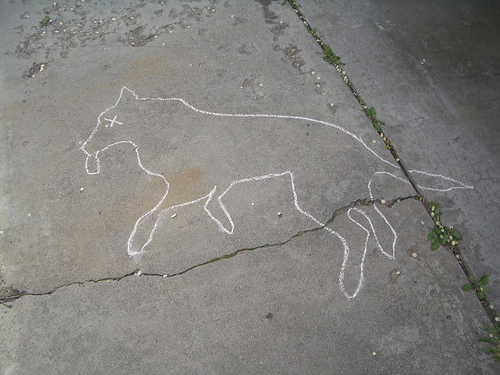
dead dogAs a public service, I hereby list the also crucial, but often unwritten, rules of fiction writing.

1) Don’t kill the dog.  You can kill the grandmother by inches or boil the baby, but if you kill the dog, readers will fling your book across the room (or their e-reader, which will break, causing them to blame you even more) and never buy or borrow another thing you’ve written. They will also badmouth you on all social media sites.

2)  Don’t kill Ned Stark or any other main protagonist who does the ethical heavy-lifting (at least, not until the end of the ned stark closebook). George R.R. Martin can get away with it. You can’t.

3) If your fan fiction begins to seriously go viral, hire a copy editor at once.

4)  Hope that your first novel won’t become a bestseller. (You’ll thank me later.)

5)  Have a room of your own where you can go to write, and where you really DO write. This room can be a coffee shop or library or a poorly lit basement. It will likely have to be somewhere out of the trajectory of your normal life, and hopefully will not have wifi.

6)  Play well with others. In this profession, as in all others, what goes around, comes around.

7)  Do not sleep with crazy people “for research.”  In fact, the list of things not to do for research is pretty long.

8)  Do not use the proper name of a beloved deity as a curse. You can justify it in many artistic and character ways, but it will hurt readers in ways you do not intend and will pull them out of the story. Even if you are profane with glee in real life, try to be more creative in type.

9)  Never underestimate the value of a cat or dog at your feet while you are writing. They make the best company and never make an inappropriate comment.

10) Do not blame your family for being hungry/wanting to see you.  You’ll eventually have to build this in.

11)  Never dis another writer in print or on social media. You may think of it as momentary amusing snark, but it NEVER GOES AWAY.*     * This does not apply if you are Lee Child talking to PLAYBOY, in which case you may say anything you damn well please and every writer on the planet will look at you with awe.

12) Realize you are writing because you love it and not because it will make you rich. Do not pre-order furniture.

13)  Come up with a great “I finished a book!” celebratory ritual. I finished my first book in 7th grade, at which time a banana split was the world’s greatest extravagance. Diana Gabaldon buys a new set of towels. That is probably more sustainable.

14)  Most important:  keep a sense of humor. It is your lifeline.

15)  Do not spend your time and creative energy writing or reading blogs when you should be writing your novel.

That being said, good blogs are often inspirational! Here are two writers to check out:

Laura Benedict’s Blog  “Time to Go Pro”

Meredith Cole’s blog “I’m Still Writing”

May I Tell You a Story?

ancientdead2Sam Golding, a young archaeologist heading a dig in Egypt, was perplexed. Strange things were being unearthed at the Tel El-Balamun site; objects from a different place and time period. His associate and friend Ibrahim invited him to go into town for the evening, but Sam demurred.

As he sat, puzzling over how to report what they were finding, a comet with a huge tail appeared in the Eastern sky. But instead of burning out, it grew larger. And closer. And hit the Earth a quarter mile from their dig.

Soon there was more large, fiery hail raining down on them. Ibrahim and another worker jumped into the old station wagon that served as their transport. It was hit.

The camp was destroyed.

Sam Golding had no way to know this was only the beginning.

This is how Plagues of Eden, our new thriller, opens.  (Well, in a very condensed version.)  After more than a year of work, the book comes out in two weeks, and I’ve been asked to blog about how writers feel during this time leading up to the publication of a new book.

Weird.

That’s my word. I’d love to know how other authors would describe it.

The conceiving, writing, and editing of the book are in the past.  The hoopla over the release is two weeks away. Print and blog interviews we’ve done and reviews we know are coming haven’t arrived yet. Radio interviews are scheduled, and B.K. and I love doing them, so that’s something to look forward to. So we’re stuck between past and future.

I love hanging out with my co-author, I love talking and discussing the books with readers. (See my recent blog post about the Writer/Reader Mind-Meld.)

The thing is, I’m a storyteller, a writer. A marketer, not so much. Many writers are in this camp, I know. But if I don’t help sell the book, readers won’t know it’s there, and they won’t buy it.

So, sometimes, I feel like I’m standing there, hat in hand, saying, “May I tell you a story? An exciting one? About a female Army chaplain who saves the world from a madman?”

Really, it seems that the point is to let readers know what the book’s about, and, if it’s up your alley, you take a chance and buy it.

So, here’s what the book’s about:

Another challenge with marketing is that I have the world’s coolest co-author. But writing thrillers with someone who’s active-duty military is kind of like writing with someone in Fight Club: the first rule of writing with active-duty military is you can’t talk about being active-duty military. That’s their main job. Writing is their stay-sane hobby. Hands off. And I truly understand. But part of the problem is, that means there’s LOTS of cool stuff I can’t tell you. But, buy the book. You’ll see. (Not a publicist’s favorite slogan.)

Having a book come out is a little bit like going to watch your kid in a school play or in a horse show. You’ve done all you can, and now there’s nothing more you can do but stand back and let them do their thing. The book is done. It’s printed. The story is told. The characters are crazy, or sexy, or interesting, or psychopathic. But they are what they are. They’re telling a story.

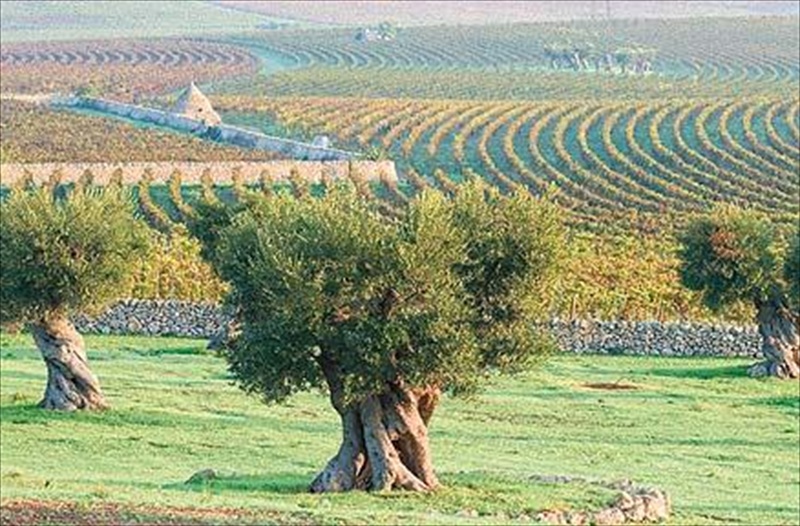
It’s about satellite-crashing and Red Tide and hitmen (and women) but it’s also about wine growing and relationships Vineyards Pugliaand Italy and China and France and Argentina and West Point. It’s about autism and Army chaplains and West Point cadets and people who are fascinated by chaos theory. It’s about what it means to be married to an secret agent.

Right now, I’m looking out the window at a doe and spotted fawns,  at a sky of Simpsons-blue, trees and lawns so green it’s as if we live in the shire. My book, the book that I have written and tended, the story I’ve loved, is about to be released to take its own path into the world.

photoweek24bJoin us on that path, if you’re so inclined. I’d love it if you did.

In other words, Psst…wanna buy a book?

MIND-MELD: The Reader-Writer Bond

Several years ago, after a relaxing few days out of town, we dropped a friend off at his place of employment. “Back to the old grind,” he sighed. Which I thought was only slightly weird, as he was currently performing in a Broadway play that had gotten rave reviews.

1 standing oNow I realize that anything becomes “same old, same old” when you do it day in and day out. But still, as we pulled away from the curb, I couldn’t help but wistfully wonder what it would be like for the rest of us, if, after putting in a good day’s work, everyone who would eventually benefit from our labor was right there in front of us, leaping to their feet, applauding and cheering. Wouldn’t that be great?

I’ve been remembering that drop-off lately, as B.K. and I are in final boarding stages for the release of PLAGUES OF EDEN.

It used to be that storytellers plied their craft in person, able to discern the involvement of the tell-ees in the flickering firelight. Now, with the advent of the printed word (and the spoken word, captured digitally), the storyteller and the reader have an enforced degree of separation. I write alone at my desk, and you read–where? In your room, on a train, in a Starbucks, in the bath? I don’t know! You’re on your own.

doctor mind meldThe inimitable Lee Child, who is a captivating speaker as well as author, asserts that when readers pick up a novel, they enter into an intense “mind-meld” with the author.

As a reader myself, I believe that to be true. A novel worth its salt creates an entire world to which the reader is given a personal invitation. You’re then invited into the  mind-space of a group of characters, and you vicariously accompany them upon whatever journey awaits you all.

And that’s something wonderful, personal, and meaningful.

Do you remember a time you had an adventure? Went on a trip to a faraway land, or even your cousin’s house–or possibly a restaurant you’d never tried before? And something magical happened–whatever it is that’s necessary for a fun occasion to become an indelible memory. To this day, you remember who else was there with you, some of the best lines that were said, the laughter (or the danger or the horror). Your own intense feelings. From then on, whether the experience was harrowing or wonderful, it was unforgettable. And you now have a bond with those folks that were there. Until the end of time, one of you can say a certain word or phrase, and the rest of you will ricochet back in time.

That is what happens when you read a really good book. You and those characters go on a heightened journey together.

So, here’s the weird thing for me, as an author. The characters in my books–I KNOW them. While a reader might spend a dozen hours with them, I’ve spent months. They’re my intimate friends. And, whether I want it to or not, what happens to them impacts me. B.K. still hasn’t gotten over what happens at the end of BEYOND EDEN.  Whereas, when I finished one day of writing in the mind of a character in PLAGUES named Leal, I went to a weekly pub meeting and had to tell my friends, “I’m sorry, I just wrote some scenes that were highly intense for me, and I’m still a bit shaken.”

And so, when a reader enters into this mind-meld, for a while, we do share that same reality. There is a bond between us: we have friends in common.

But, here’s the thing. I really wish we could be in the mind-meld together. If not at the same time, that at least, as the writer, I could know it was happening. I don’t know how to bridge that gap, and I wish that I did.

Any suggestions?

So sometimes, sitting alone at my desk, having adventures with these fictional close friends, I do wish that I knew the flesh-and-blood “fellowship of the book” who would eventually be joining with me.

the-hobbit-reveals-four-more-banner-posters-116976

Truthfully, I don’t need that standing ovation. I don’t even NEED us to be in the same room at the same time with my fellow journeyers, or obviously, I’d have stopped writing by now.

But it is awfully nice to know that the readers are out there, and to hear from some with whom I now have friends in common, and who have joined me on the journey.

So, thanks! And, when you finish your day’s work, take a minute and picturing me applauding. Well done.

Do-more-about-climate-change-Another-standing-ovation

Tag Cloud